
The Initiative
Since early 2025, L’Arche has been engaged in a learning initiative exploring inclusive social entrepreneurship as it is developed in L’Arche communities in the world. At the heart of this work is a central question: How can we better support and scale this approach?
Together with local teams in four countries, L’Arche International launched a joint-learning initiative with several objectives:
- Identify and define social entrepreneurship programs: What are their specific features?
- Understand models: What helps these programs to be successful? Are there needs or challenges?
- Learn about best supports for programs across contexts: How can L’Arche International best help support local initiatives?
L’Arche programs across four different contexts participated in this learning initiative:
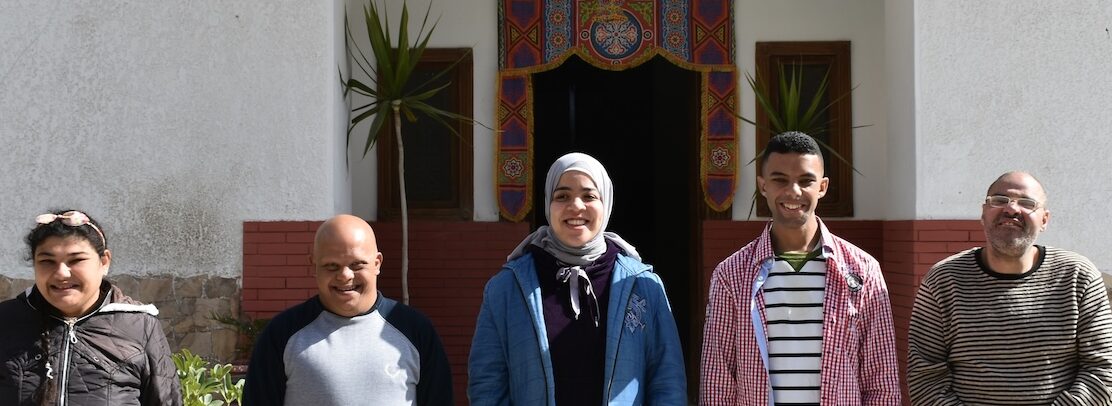
- The guest house of L’Arche Alexandria in Egypt welcomes guests in this city that receives many tourists, with people with disabilities fully integrated as members of the staff.
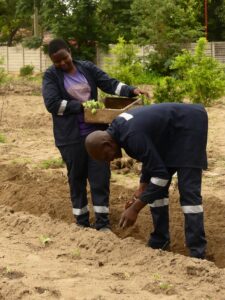
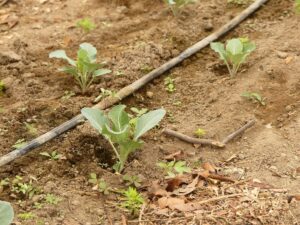
- L’Arche Asansol’s market garden in India is adapting its practices through the use of removable tents; people with disabilities receive training through their participation.
- The shop L’endroit à l’envers (The Upside Down) in Compiègne, France, managed by the “ESAT de L’Arche Oise”, opened at the end of 2024 and sells products created by workers with disabilities from the ESAT and from other communities in France and around the world.
- L’Arche Zimbabwe’s market garden, where people with disabilities play an active role, has been established for many years. Its members are now seeking to evolve their practices to better respond to the needs of the market.
Over the past year, we have worked together to explore and reflect on this work together. Today we are ready to draw some initial conclusions!
 A framework for social entrepreneurship and initial findings
To be able to communicate clearly about social entrepreneurship programs and to offer a shared vision – of which each project is a practical example – together, we built a framework, or maturity grid, for social entrepreneurship at L’Arche.
At L’Arche, social entrepreneurship means creating inclusive, sustainable, community-driven initiatives that empower people with disabilities through meaningful economic activity. There are three key principles; these reinforce one another:
- Inclusion so that all project participants are involved in the different stages and in society,
- Social utility and empowerment in order to develop skills and capabilities through meaningful human relationships;
- Sustainable business models because we are talking about companies that produce useful and beneficial goods or services.
We were able to make several observations on the needs and realities:
L’Arche’s Social Entrepreneurship programs create meaningful opportunities for people with disabilities to be recognized and valued in the workplace. These initiatives also offer training – for example, a young professional named Michael in Alexandria – or a woman named Sandrine in Compiègne – have been able to develop their skills and gain confidence. The programs also multiply opportunities for transformative relationships.
For these initiative efforts to succeed, it is necessary to adapt tasks and rethink team structures to ensure appropriate supports and accompaniment for participants. These are prerequisites for empowerment and self-determination. The role of those providing support to people with disabilities is key, because they are responsible for ensuring inclusion on a daily basis and must have technical skills as well.
Social entrepreneurship programs often require significant investment to launch and to develop their financial income in the direction of profitability. They are challenging to sustain without some level of subsidy. Their primary value is social – we must improve the way we evaluate and take this impact into account especially because it is not sufficiently recognized by the market. Social Entrepreneurship initiatives require financial partnerships to be sustainable.
How can we support inclusive social entrepreneurship?
Depending on the context and the type of program, support by L’Arche International can take different forms such as promoting peer learning and exchange, supporting fundraising and communications, or helping to identify and seek specialist expertise. Because the projects are very diverse, one challenge faced by local teams is connecting with others whose contexts, activities and questions are similar. This is where access and connection to an international network for peer learning and exchange is most valuable.
Today, we can also share some recommendations developed in partnership with Ellyx, a French cooperative that specializes in innovation and experimentation in the social sciences:
- Start small to be able to test and adjust the program, project both to refine the activity, and also to take the time to secure required funds to sustain the program.
- Be clear from the start about social and economic aspects to avoid confusion and establish a stable working environment.
- Professionalize roles, both for people with disabilities and those supporting them, including through focused training in the specifics of the sector.
- For service-based activities, invest in quality customer experience to nurture trust and credibility.
- Adapt tasks to individual abilities and preferences, for example by breaking activities into steps and offering diversity in tasks.
- Provide structured support for teams, such as practice analysis, because these are complex positions requiring a variety of skills.
- Build strong local partnerships to strengthen roots that promote sustainability and social impact.
- Develop communications to increase visibility and support.
- Use simple, practical indicators; like any entrepreneur, project teams need key data to inform decision-making.
- Place relationship at the heart of the project – at L’Arche it is always human connection and encounter that is central.
 What do the next steps look like?
With positive early results and recommendations, we are prepared to scale this work to support other projects in their ambition and we have exciting long-term goals:
- Empower community resilience through the integration of social entrepreneurship projects.
- Promote greater inclusion of people with disabilities in the workplace
- Develop professional skills among people with disabilities
- Establish partnerships at local, national, and international levels around social entrepreneurship to amplify the voice of people with disabilities and support their inclusion through work.
We hope that this will make social entrepreneurship a driving force within L’Arche in the world, raising awareness of the skills of people with intellectual disabilities and promoting their full inclusion in society.
Contact us to learn more about this project or about social initiatives with L’Arche worldwide!

